


Forged shaft manufacturing from drawings
Forged Shaft Manufacturing
Jinhua Machinery supplies machined forged shafts from customer-approved drawings in Changshu, China. The review connects the specified forged blank with machining allowance, datum strategy, treatment requirements, journal or bore finishing, grinding, inspection and traceability. A forging route may support load-bearing geometry, material utilization or repeated production, but suitability depends on grade, section change, tooling, quantity and the finished drawing. Forging source and special-process responsibility are confirmed for each quotation and are not presented as universal in-house capability; final application and material approval remain with the customer.
Request a Quote
Direct answer
Forged-shaft review covers blank source and condition, machining allowance, datum recovery, finishing stock, drawing-specified treatment, traceability and final inspection. Published precision values apply only to eligible completed, finish-machined shaft features within their stated ranges; they are not forging-blank tolerances. Forging and special-process provider responsibility, required certificates and control-plan records are confirmed for each project before quotation.
- Technical content reviewed by
- Process Engineering and Quality Engineering
- Last reviewed
- Capability basis
- Production records and internal inspection data
What Is a Forged Shaft?
A forged shaft is a made-to-drawing rotational component whose load-bearing blank is shaped under compressive force before its final journals, shoulders, bores, splines, teeth, threads, faces, and datum relationships are machined. Forging can place material closer to the finished shape, reduce removal from solid stock, and support grain-flow, strength, fatigue, impact, or material-utilization objectives. These benefits depend on the steel grade, forging temperature, reduction, die design, heat treatment, and finished geometry; the word “forged” by itself does not define performance.
Forged shafts range from stepped cylindrical blanks to near-net forms with flanges, bosses, gear sections, local diameter changes, or hollow features. Hot forging is generally reviewed where larger deformation, thicker sections, or more complex blank geometry is required. Cold forging can suit smaller repeated features, splines, sleeves, upset sections, and diameter reduction when material formability and tooling access permit.
This page focuses on the finished forged shaft as a product family: blank selection, shaft datums, heat-treatment movement, machining allowance, journal finishing, runout, and inspection. The broader Machined Forging page explains how forgings are converted into finished components. The dedicated Cold Forging and Hot Forging pages explain the characteristics, advantages, process routes, and limitations of each forming method.
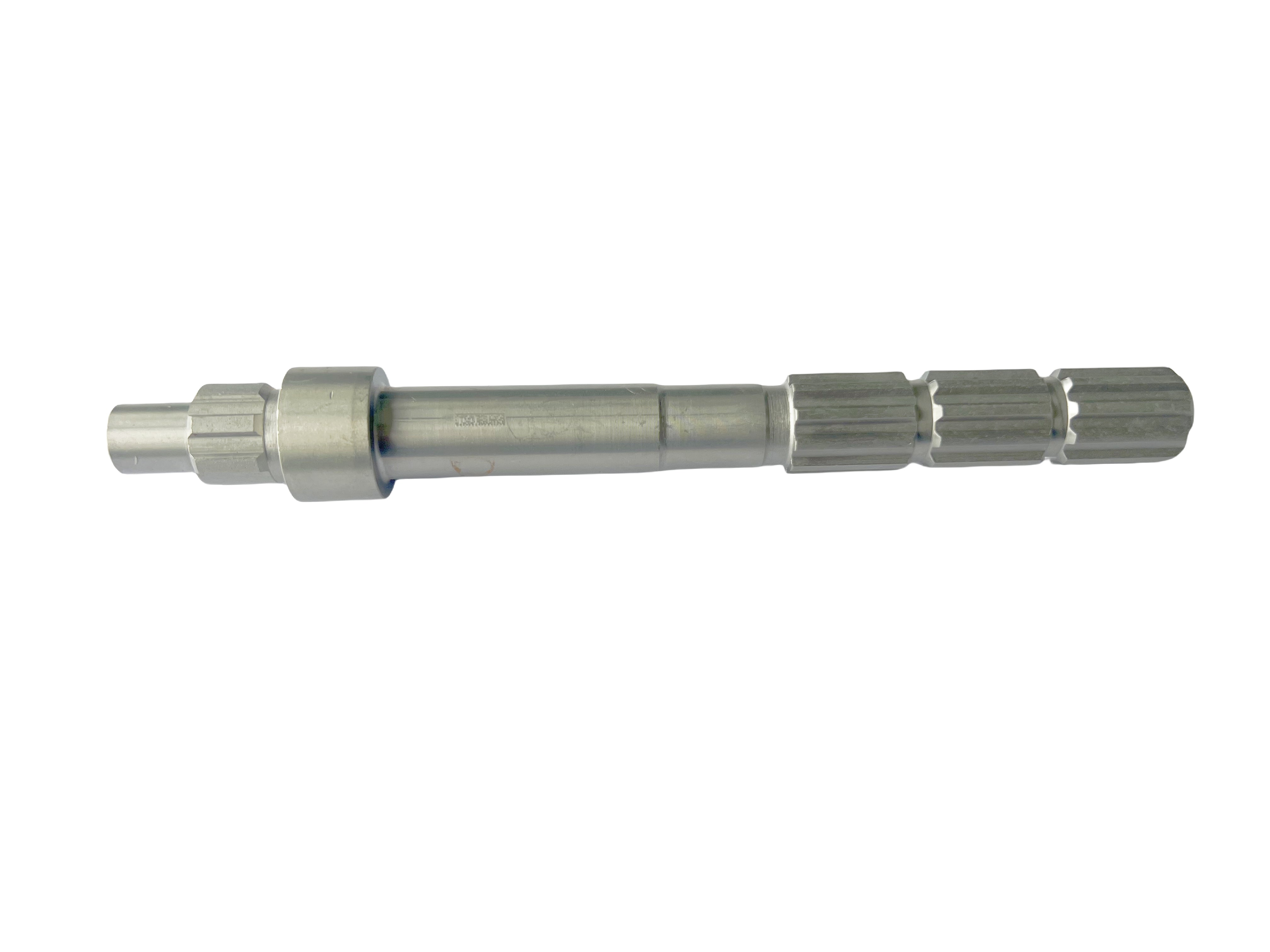
Forged Shaft Manufacturing
Manufacturing planning starts with the finished shaft drawing and works backward to the blank. State whether delivery covers a forged blank, a partly machined shaft, or the completed shaft so the drawing and acceptance stage match the quoted scope. The review compares forged stock with bar or other starting forms and considers load path, section changes, annual demand, tooling, material yield, grain-flow intent, die access, draft, flash location, scale, decarburization, and the surfaces available for locating the part during machining. A separate forging drawing can define the blank envelope, allowance, mismatch, draft, parting line, test locations, and traceability requirements.
A reviewed forged-shaft route can connect the approved blank source with specified heat treatment, datum machining, finish machining of bores and outside diameters, tooth or spline processing, grinding, traceability, cleaning, and packaging. Cold-forged or cold-extruded starting forms can be evaluated when material, geometry, tooling and annual demand support them. Only operations required by the released drawing are included, and forming or special-process provider responsibility is confirmed during quotation.
Datum planning is critical because a forged surface is not automatically a reliable finish-machining reference. The process must establish stable locating surfaces before controlling journal diameter, bore alignment, shoulder position, spline or gear runout, and end-face relationships. Machining allowance must be sufficient to remove blank variation, scale, decarburized material where applicable, and heat-treatment movement without removing more stock than necessary.
Process ownership and supplier boundaries are defined during quotation. Identify who commissions the forging tooling, who owns it, and who approves the blank drawing and machining allowance. Forging source, heat treatment, surface treatment, special testing, and machining stages must be connected through an agreed control plan and traceability route, whether an operation is performed directly or by an approved specialist. State whether sample approval and acceptance apply to the blank, an intermediate condition, or the completed shaft, and who releases the next stage. The quotation should identify required certificates, subcontracted special-process records, inspection reports, and change-control expectations.
For an RFQ, provide the finished drawing and any available blank drawing, 3D data, material and governing standard, delivery condition, heat treatment, hardness or case requirements, critical characteristics, annual and batch quantities, inspection reports, traceability, packaging, and schedule. Grain-flow evidence, metallurgical testing, nondestructive examination, balancing, coating, or special validation should be stated explicitly rather than assumed.
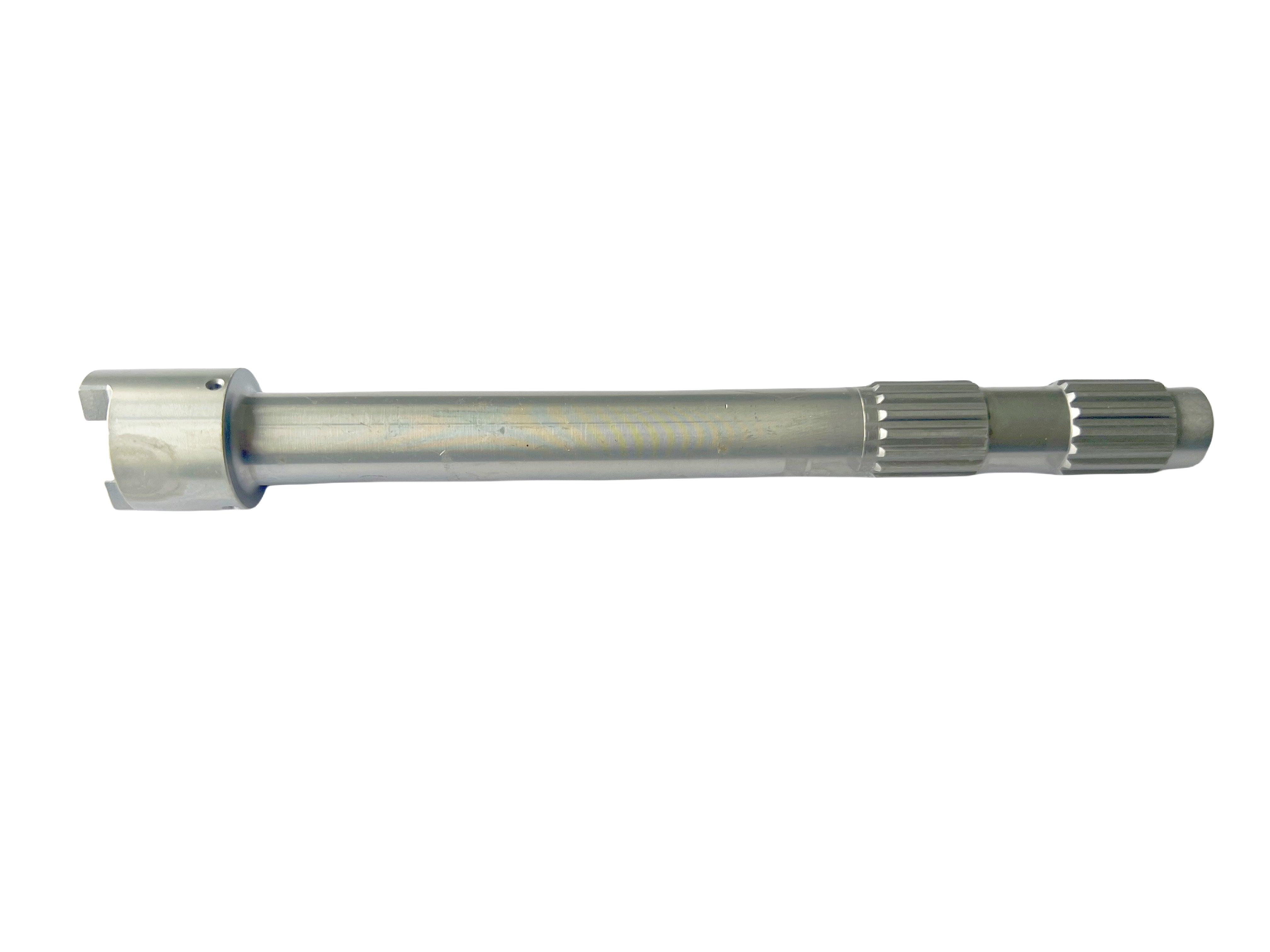
Forged Shaft Materials
Forged shafts use multiple carbon and alloy steel families rather than one default grade. For hot-forged products, commonly reviewed Chinese grades include 20, 25, 35, 45, 40Cr, and 42CrMo; commonly referenced SAE grades include 1020, 1025, 1035, 1045, 5140, and 4140. Lower-carbon steels can support forming and later carburizing routes, while medium-carbon and alloy steels may be selected for higher core strength, hardenability, or quench-and-temper requirements.
Cold-forging routes may consider 16MnCr5, ZF6, Chinese grades 20, 25, 35, 45, and 40Cr, together with SAE 1010, 1015, 1020, 1025, 1035, 1045, and 4140. Suitability depends on exact chemistry, incoming bar condition, spheroidizing or annealing condition, reduction ratio, geometry, tooling, lubrication, and the required properties after forming. A steel that is cold-formable for one component is not automatically suitable for every shaft design.
Material selection should follow the functional requirement rather than a familiar grade name. Buyers should define the governing standard and edition, grade, cleanliness, hardenability band, delivery condition, mechanical properties, certification, and any restrictions on substitution. If the program requires macrostructure, grain-size, decarburization, ultrasonic testing, magnetic-particle examination, or mechanical testing, the acceptance criteria and sampling plan should be included in the RFQ.
Equivalent designations across GB/T, SAE, ASTM, EN, DIN, ISO, or customer standards are not assumed to be interchangeable. Chemistry limits, hardenability, inclusion control, delivery condition, and test methods must be compared before an alternative grade is approved.
Forged Shaft Heat Treatment
Heat treatment is selected around the required core properties, wear surfaces, machining sequence, and distortion risk. Forged-shaft specifications may call for normalization or annealing, quench and temper, carburizing, localized induction hardening, or stress relief. These are drawing-defined treatment options; this page does not represent unresolved forging or heat-treatment operations as in-house capabilities.
The drawing should define hardness range, effective or total case depth where applicable, core properties, test position, microstructure, retained austenite or carbide requirements when relevant, decarburization limits, straightness, and areas that must remain soft. Treatment name alone is insufficient because temperature, section size, alloy hardenability, quench method, tempering, and test location influence the result.
Allowance and datum strategy must anticipate heat-treatment growth and distortion. Critical journals, bores, faces, and tooth or spline relationships can be left for post-treatment finishing when the drawing requires tighter control. Any permitted straightening method, rework limit, hardness verification, metallurgical report, and traceability record should be agreed before production release.
Forged Shaft Tolerance
Forged-blank acceptance and finished-shaft acceptance are separate control stages. Blank controls can include envelope, stock allowance, mismatch, flash, draft, straightness, scale, laps, folds, surface discontinuities, and parting-line location. Finished controls can include journal diameter, bore size, roundness, cylindricity, straightness, concentricity or runout, shoulder position, face perpendicularity, spline or gear geometry, and surface roughness.
Within the stated size and process ranges, completed heat-treated and finish-machined shaft surfaces can be evaluated against the verified capabilities below. These values are not forging-blank tolerances and are not automatic guarantees for every geometry. Material, heat treatment, shaft length, wall thickness, datum access, feature interaction, production quantity, and the agreed inspection method remain part of the drawing review.
Inspection planning can include incoming material certificates, visual or magnetic-particle examination when specified, blank gauges, hardness and metallurgical checks, dimensional layouts, coordinate measurement, roundness, runout, roughness, gear or spline inspection, and case-depth verification. Required reports should identify feature, datum, instrument or method, sampling frequency, and whether blank and finished-part records must be linked through traceability.
A practical control plan rejects unsuitable forgings before they consume finish-machining capacity and verifies the completed shaft after all heat treatment, grinding, and finishing. If nondestructive examination is required, specify the method, sensitivity, examination area, process stage, operator qualification, and reject criteria rather than relying on a general request for crack testing.
Forged Shaft Applications
Forged shafts are commonly evaluated for automotive steering and transmission systems, construction machinery, pumps, motors, reducers, agricultural equipment, heavy industrial drives, and other assemblies exposed to torque, bending, impact, or fatigue. Flanged shafts, gear shafts, axle-like parts, hollow shafts, and shafts with substantial section changes can benefit when the blank is shaped closer to the load path and finished form.
Application data changes the manufacturing decision. Reversing torque and fatigue can make fillet transitions, grain-flow intent, surface condition, and residual stress important. High-speed service may add balance and runout controls. Abrasive or corrosive environments can require material or surface protection. Integrated splines or teeth add hardness, datum, and inspection requirements. Buyers should provide load, speed, duty cycle, environment, assembly method, mating features, service-life expectations, and validation responsibilities.
Forged shafts are not automatically the most economical choice. Tooling, annual demand, blank complexity, machining reduction, material yield, qualification cost, and expected program life should be compared with bar-machined or alternative blanks. A machining-intensive prototype may support early validation, but a later production-forging route must preserve the approved functional datums and inspection requirements.
Review the broader Shaft Types & Manufacturing Capabilities hub, the Quality Inspection page, or send a drawing through Request a Quote. Jinhua Machinery manufactures to customer-approved specifications and does not replace design-owner validation.
Forged Shaft FAQ
When should a buyer consider a forged shaft?
A forged shaft is worth evaluating when load path, section changes, fatigue, impact, material yield, or production volume may justify a shaped blank. The decision should compare tooling, material, machining reduction, qualification cost, and program demand with bar or other starting forms.
How do hot-forged and cold-forged shafts differ?
Hot forging generally supports larger deformation, thicker sections, and more complex blank geometry. Cold forging can support smaller repeated features, splines, sleeves, upset sections, and diameter reduction when the steel, geometry, lubrication, and tooling permit. Each drawing requires an independent route review.
How much machining allowance should a forged shaft have?
There is no universal allowance. It must cover blank variation, draft, mismatch, scale or decarburization where applicable, heat-treatment movement, datum establishment, and the stock required for final machining or grinding. The blank and finished drawings should define the control method.
What finished precision can Jinhua Machinery evaluate for forged shafts?
After heat treatment and finish machining, applicable features can be reviewed against the published outside-diameter, bore, straightness, runout, perpendicularity, and roughness capabilities within their stated ranges. Final commitment remains subject to the complete drawing, material, geometry, datum system, heat treatment, quantity, and inspection plan.
How should blank and finished-shaft delivery be specified?
Identify whether delivery is the forged blank, a partly machined shaft, or the completed shaft, and provide the applicable drawing, available 3D data, and acceptance requirements for that condition. Confirm tooling ownership, allowance approval, and responsibility for any remaining operations during quotation.
Related Manufacturing Cases
These are specific made-to-drawing examples. Their materials, processes and tolerances are component-specific and do not define a universal catalogue specification.


Request a quote
Request a Quote
Send drawings. Get a forged shaft manufacturing review.
Send the drawing and revision, material, critical dimensions and tolerances, surface and heat-treatment requirements, annual usage, batch volume, inspection or PPAP documents, packaging and delivery target.