


Pump Shaft Manufacturing
Jinhua Machinery is a custom pump shaft manufacturer in Changshu, China, producing components from customer-approved drawings for steering-pump, hydraulic-pump and industrial-pump applications. The manufacturing review connects bearing journals, seal surfaces, bores, coupling or spline interfaces, straightness, runout and concentricity requirements to the drawing datums. Material selection, fluid or corrosion exposure, specified treatment, grinding or polishing, cleaning, inspection records, batch volume and annual demand are evaluated before quotation. The proposed route is component-specific; pump-system design, fluid compatibility and final application approval remain with the customer.
Request a Quote
Direct answer
Precision outside-diameter grinding, bore finishing and datum-related runout can be evaluated against the published capability ranges for applicable pump-shaft features. Final acceptance depends on shaft length, support condition, seal and bearing relationships, fluid or corrosion exposure, material, drawing-specified treatment, surface finish and the customer-approved inspection method. The equipment designer remains responsible for fluid compatibility and final pump-system validation.
- Technical content reviewed by
- Process Engineering and Quality Engineering
- Last reviewed
- Capability basis
- Production records and internal inspection data
What Is a Pump Shaft?
A pump shaft transmits torque from a motor, gear, pulley, or other driver to a pump element such as an impeller, rotor, vane assembly, or gear set. It also locates bearings and passes through sealing areas, so rotational alignment, surface condition, corrosion exposure, and dimensional stability can be as important as basic strength.
Pump shafts vary widely. A steering or hydraulic pump shaft may be compact and include splines, flats, threads, grooves, or gear features. An industrial pump shaft can be longer and place greater emphasis on straightness, bearing spans, seal sleeves, coupling fits, and corrosion. The drawing should identify wetted surfaces, bearing and seal interfaces, drive features, rotation, speed, load, and assembly method.
Jinhua Machinery supports drawing-based pump shaft components for steering pumps, hydraulic systems, motors, and industrial assemblies. The manufacturer reviews production feasibility; the pump designer remains responsible for hydraulic performance, rotor dynamics, sealing system, and final validation.
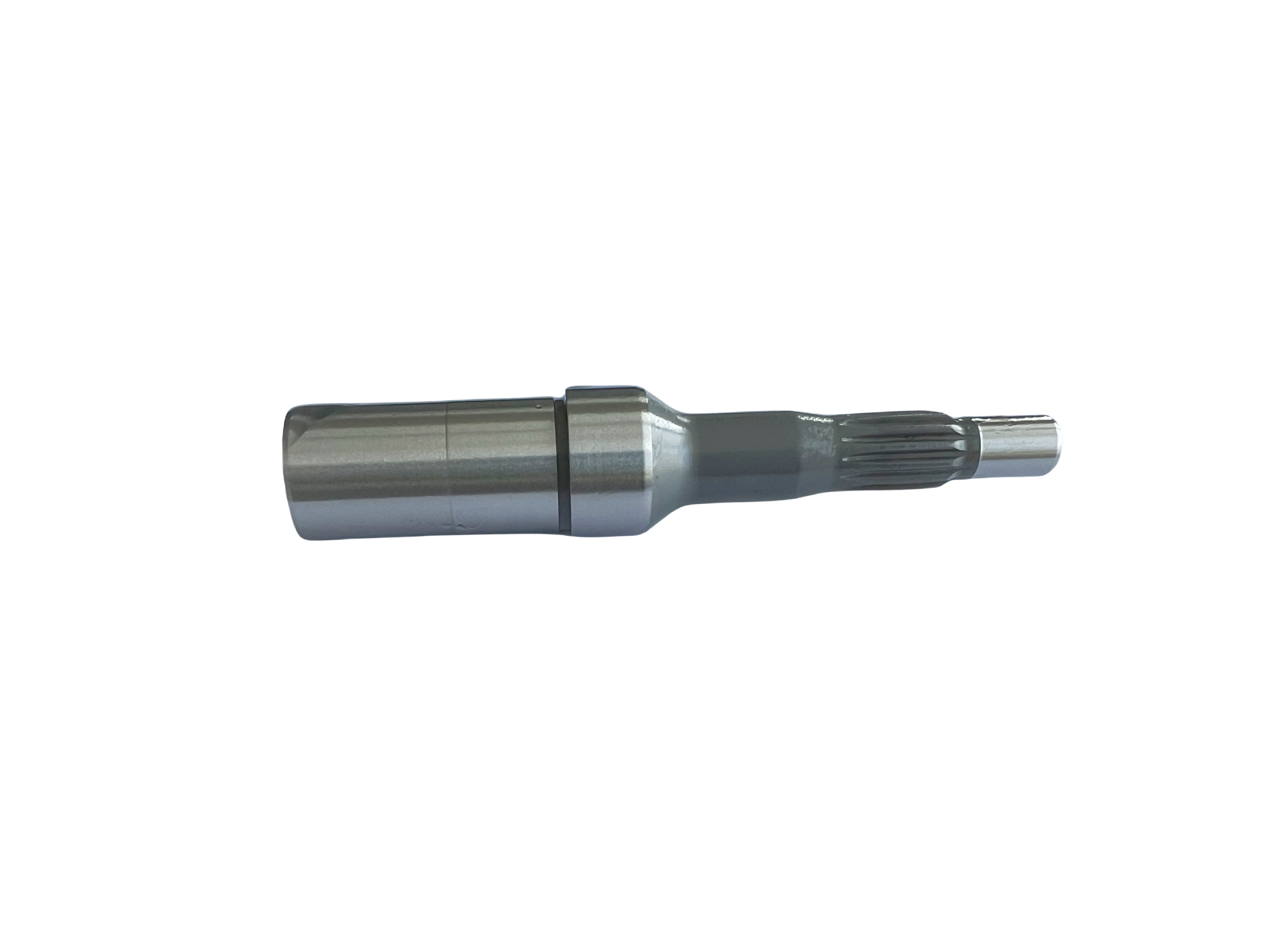
Pump Shaft Manufacturing
Process planning begins by establishing bearing, seal, coupling, spline, and pump-element datums. Starting stock may be bar, tube, or a shaped blank depending on geometry and volume. Operations can include turning, milling, drilling, deep-hole work, threading, spline or keyway production, heat treatment, straightening where approved, cylindrical or centerless grinding, polishing, surface protection, cleaning, marking, and inspection.
Seal and bearing surfaces are often finished late in the route to protect size, form, and roughness. Long shafts may need centers, steady rests, stress-relief planning, balanced material removal, and controlled handling. Fluid-exposed parts need drawing-defined cleaning and protection before delivery.
Prototype routes can favor flexible CNC operations, while repeated production may use formed blanks, dedicated fixtures, gauges, automated loading, or controlled packaging. The quotation should identify prototype quantity, lot size, annual demand, target launch, fluid, environment, and required records.
Jinhua Machinery reviews all features from the released drawing rather than applying one pump-shaft process. Send the technical package through Request a Quote.
Handling between operations is part of the process for slender or polished shafts. Rack support, lifting points, separators, temporary corrosion protection, and capped threads can prevent bending, dents, or abrasive contact that would not be corrected by final dimensional checks. Identify whether delivery is the shaft alone, the shaft with separately packed sleeves, keys, nuts, or other items, or a fitted assembly. State who supplies each item, whether assembly is included, and which condition governs delivery acceptance. Specify the bearing, seal, spline, thread, and locating surfaces that need protection, together with marking and packaging requirements.
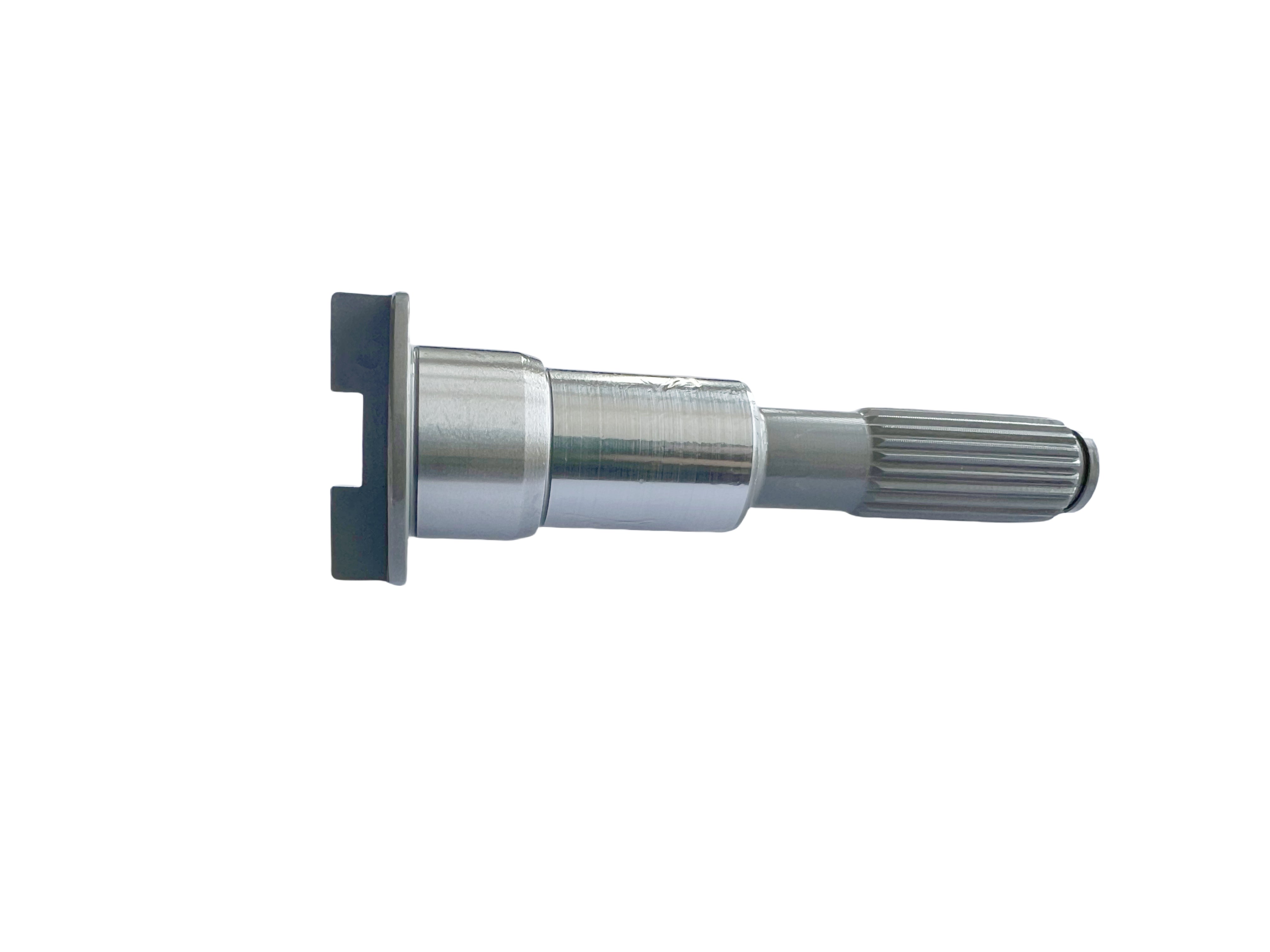
Pump Shaft Materials
Pump-shaft material starts with the fluid, temperature, pressure, shaft stress, wear surfaces, and corrosion allowance. SAE 1045 and 42CrMo4/SAE 4140 are common strength-oriented choices for non-corrosive or protected service. Martensitic stainless grades such as 410, 420, or 431 and precipitation-hardening Type 630/17-4PH may be considered where strength, wear resistance, and moderate corrosion resistance must be balanced.
For wetted and more corrosive service, industry choices include 304, 316, or 316L stainless steel; duplex 2205; super duplex 2507; and, for selected aggressive media, nickel alloys such as N04400/Monel 400, Alloy 625, or C-276. These grades are not interchangeable. Chloride concentration, oxygen, pH, temperature, velocity, crevice conditions, cleaning chemicals, galvanic couples, and stress-corrosion risk must be evaluated for the actual pump system.
State exact grade, standard, delivery condition, mechanical properties, corrosion or passivation requirements, certification, and substitutions. Compatibility must include the fluid, seals, bearings, sleeves, lubricant, and mating components. Machinability, grinding response, residual stress, heat treatment, and material removal can affect straightness, so the equipment designer or corrosion specialist must approve the final choice.
Where a coating or plated layer is specified, the drawing should clarify whether finished dimensions apply before or after deposition and which surfaces are masked. Coating porosity, adhesion, thickness, hydrogen-embrittlement controls for susceptible steels, and post-treatment steps may require separate standards. The fluid owner must confirm that the finish is compatible with seals and the operating medium.
Pump Shaft Heat Treatment
Quench and temper can establish core properties; induction hardening can improve selected bearing, spline, or drive surfaces on suitable steels; carburizing or nitriding may be specified for particular wear requirements. Stainless grades can require solution treatment, precipitation hardening, stress relief, or passivation depending on alloy and design. Coatings and plating are surface treatments and need separate corrosion and dimensional review.
The specification should identify hardness, case depth where applicable, test locations, straightness, areas to protect, post-treatment grinding or polishing, and required certificates. Thermal processing can move a long shaft or change seal and bearing relationships, so allowance, sequence, fixtures, and final inspection must be planned together.
Pump Shaft Tolerance
Pump-shaft tolerances commonly focus on bearing-seat diameter and form, seal-surface diameter and roughness, straightness, concentricity, total indicated runout, shoulder spacing, coupling or spline fit, thread alignment, and the location of the pump element. Long spans can make datum selection and support conditions important during measurement.
Inspection may use micrometers, air gauges, roundness and runout equipment, coordinate measurement, roughness instruments, spline or thread gauges, hardness testing, and dedicated fixtures. Polished seal surfaces may require specific roughness parameters and directionality, not only a general finish symbol. Corrosion treatment thickness can also affect fits.
Define critical datums, measurement support, temperature, sampling, report format, material and treatment certificates, cleanliness, marking, and packaging. Jinhua Machinery checks against approved requirements; it does not infer pump performance from dimensional inspection. See quality inspection.
Runout results depend on what supports the shaft and which surface establishes rotation. A drawing should state whether total runout is checked between centers, on bearing journals, or from another functional datum. For long parts, gravitational sag and measurement force may also matter. Seal-area roughness should specify the relevant parameter and any lead, lay, or waviness restriction needed by the seal design.
Pump Shaft Applications
Pump shafts are used in automotive steering and hydraulic pumps, industrial centrifugal and positive-displacement pumps, lubrication systems, coolant circulation, water handling, chemical processing, agricultural equipment, construction machinery, and motor-pump assemblies. Compact units may integrate splines, gears, or rotor features; larger pumps may use couplings, sleeves, keys, impeller threads, and multiple bearing or seal locations.
Clean water, oil, fuel, coolant, chemicals, and abrasive fluids create different material and surface needs. Speed and span affect runout and vibration. Pressure and seal arrangement influence surface finish and axial location. Maintenance method can affect threads, extraction features, and replaceable sleeves.
Provide fluid, temperature, pressure context, speed, torque, duty cycle, bearing and seal information, coupling or drive data, environment, and life target. Identify the measurement references and support condition used for delivery acceptance, especially when a sleeve, key, or other fitted item affects access to a shaft surface. Final hydraulic, corrosion, seal, and rotor-dynamic validation remains with the equipment owner.
For repair or legacy pump programs, a sample can help identify geometry but should not be treated as the sole authority for material, heat treatment, or original tolerance. Wear may have changed the measured size, and prior repairs may have altered the surface. The buyer should provide available drawings, service history, and acceptance responsibility before reverse-engineering work is evaluated.
Pump Shaft FAQ
Does a pump-shaft quotation include sleeves, keys, or assembly?
Identify whether the RFQ is for the shaft alone, separately supplied accessories, or a fitted assembly. List who supplies each sleeve, key, nut, or other item, and state assembly, marking, surface protection, packaging, and acceptance requirements. Confirm these items in the quotation.
Which surfaces are usually most critical?
Bearing seats, sealing areas, coupling or spline interfaces, pump-element locations, shoulders, and datum relationships commonly control assembly. The drawing identifies the actual critical features.
Are stainless steels always required for pump shafts?
No. Material depends on fluid, corrosion, strength, wear, temperature, cost, and mating parts. Carbon, alloy, stainless, and specialty materials are selected by the design specification.
What precision can Jinhua Machinery achieve on pump shafts and seal surfaces?
Reviewed pump shafts can achieve a 0.005 mm total ground-diameter tolerance, 0.003 mm roundness, 0.005 mm cylindricity, 0.005 mm straightness per 300 mm, and Ra 0.2 μm within the stated size range. Precision bores and 0.010 mm datum-related runout can also be evaluated with the fluid, material, coating, seal, and support conditions.
Can seal surfaces be finished after heat treatment?
Yes when the route and allowance permit. Grinding or polishing may restore size, form, and roughness after treatment, but the required process must be planned from the drawing.
Send drawings. Get a pump shaft manufacturing review.
Send the drawing and revision, material, critical dimensions and tolerances, surface and heat-treatment requirements, annual usage, batch volume, inspection or PPAP documents, packaging and delivery target.