


Custom shaft manufacturing from drawings
Custom Shaft Manufacturing
Jinhua Machinery is a custom shaft manufacturer in Changshu, Jiangsu, China, producing made-to-drawing components for automotive and industrial programs. Each project starts with the customer-approved drawing and revision, then reviews material, blank form, functional datums, critical dimensions, machining, grinding, specified treatment requirements, inspection records, batch size and annual demand. Verified production records support CNC turning, milling, spline rolling and selected cylindrical, internal and centerless grinding routes. The proposed process and quality plan are confirmed before quotation; shaft design, load calculation and final application approval remain with the customer.
Request a Quote
Direct answer
Verified internal records support CNC turning, milling, spline rolling, cylindrical grinding, internal grinding, centerless grinding, dimensional inspection and hardness inspection for applicable shaft features. The published precision values remain feature- and range-specific, subject to the released drawing, material, geometry, annual volume, datum system and agreed inspection method. Treatment requirements and unresolved special-process boundaries are confirmed during quotation rather than represented as universal in-house capability.
- Technical content reviewed by
- Process Engineering and Quality Engineering
- Last reviewed
- Capability basis
- Production records and internal inspection data
What Is a Custom Shaft?
A custom shaft is a made-to-drawing rotational component designed around a buyer’s assembly, loads, interfaces, and production requirements. It may transmit torque, support a gear or rotor, locate bearings, carry a pump element, guide sliding parts, or combine several functions in one piece. Geometry can include journals, shoulders, steps, tapers, bores, cross holes, keyways, splines, threads, grooves, flats, sealing surfaces, and mounting features.
“Custom” does not mean changing only length or diameter. Material grade, blank condition, datum strategy, tolerance, surface roughness, heat treatment, coating, marking, and inspection records can all be unique. The design owner defines functional requirements; the manufacturer reviews whether the proposed route can produce them repeatedly.
Jinhua Machinery supports drawing-based shaft projects for steering, gearbox, pump, motor, machinery, and motion-control assemblies. This page explains the sourcing questions that apply across that category. Buyers looking for individual families can also review steering shafts, input and output shafts, forged shafts, gear shafts, spline shafts, worm shafts, and pump shafts.
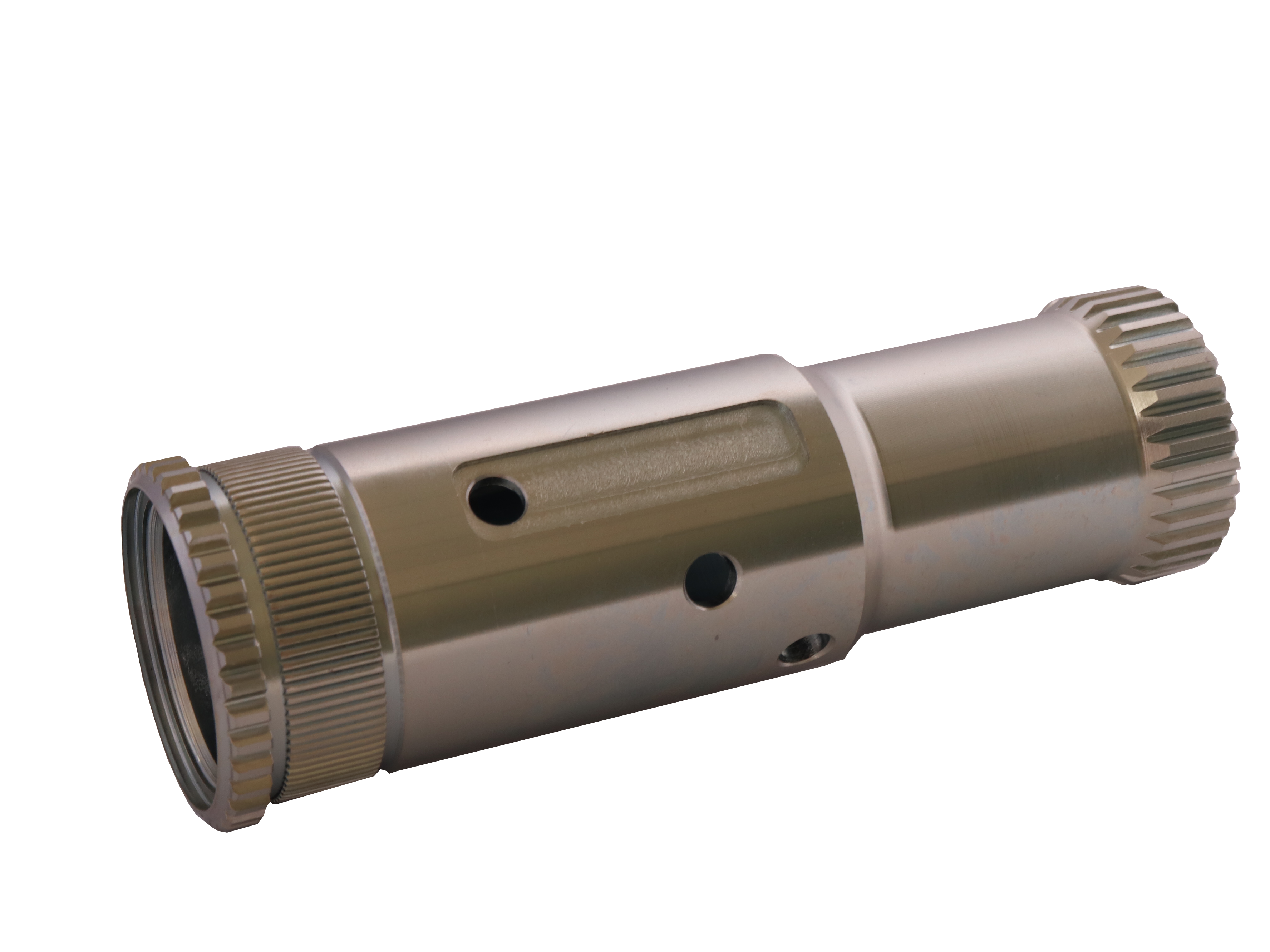
Custom Shaft Manufacturing
Manufacturing starts with revision-controlled drawings, specifications, and commercial volume. The review identifies functional datums, critical characteristics, mating features, load-bearing areas, heat-treated zones, and surfaces that require finishing after thermal processing. It also compares bar stock, tube, forged blanks, cold-formed blanks, and other starting forms according to geometry, material utilization, strength, tooling, and quantity.
A common route may combine sawing, center preparation, CNC turning, milling, drilling, gun drilling, threading, spline or keyway processing, specified heat treatment, straightening where permitted, cylindrical, internal or centerless grinding, honing, deburring, cleaning, surface protection, marking, and final inspection. Jinhua Machinery's verified internal process records support CNC turning, milling, spline rolling, cylindrical, internal and centerless grinding, dimensional inspection and hardness inspection; every project still requires a drawing and capacity review. Unresolved special-process provider boundaries are not represented as in-house.
Prototype routes often use flexible machining and standard fixtures. Higher repeated volumes may justify forged or formed blanks, dedicated tooling, multi-operation machines, automated loading, special gauges, and purpose-built packaging. Compare the starting blank, tooling, inspection and delivery condition for each route against the same drawing revision. State prototype quantity, production lot, annual demand, target launch and expected program life.
Define this custom component's delivery scope: a machined blank, a finished shaft, or a shaft with specified treatment, surface protection, marking and inspection or PPAP records. Identify customer-supplied blanks or mating parts, and agree tooling and gauge ownership, maintenance and availability. Jinhua Machinery reviews manufacturability against the controlled drawing, available 3D data and agreed scope. Visit Request a Quote to send the available information.
Design-for-manufacture review also looks for avoidable cost drivers: interrupted cuts, unnecessary undercuts, inaccessible cross holes, long unsupported diameters, sharp transitions, mixed datum systems, and blanket tolerances applied to nonfunctional surfaces. A suggested change is only a proposal; the buyer controls drawing revision and approval. Freezing the revision, approved sample status, and change-control route before production helps prevent a quotation from being compared against a later design.
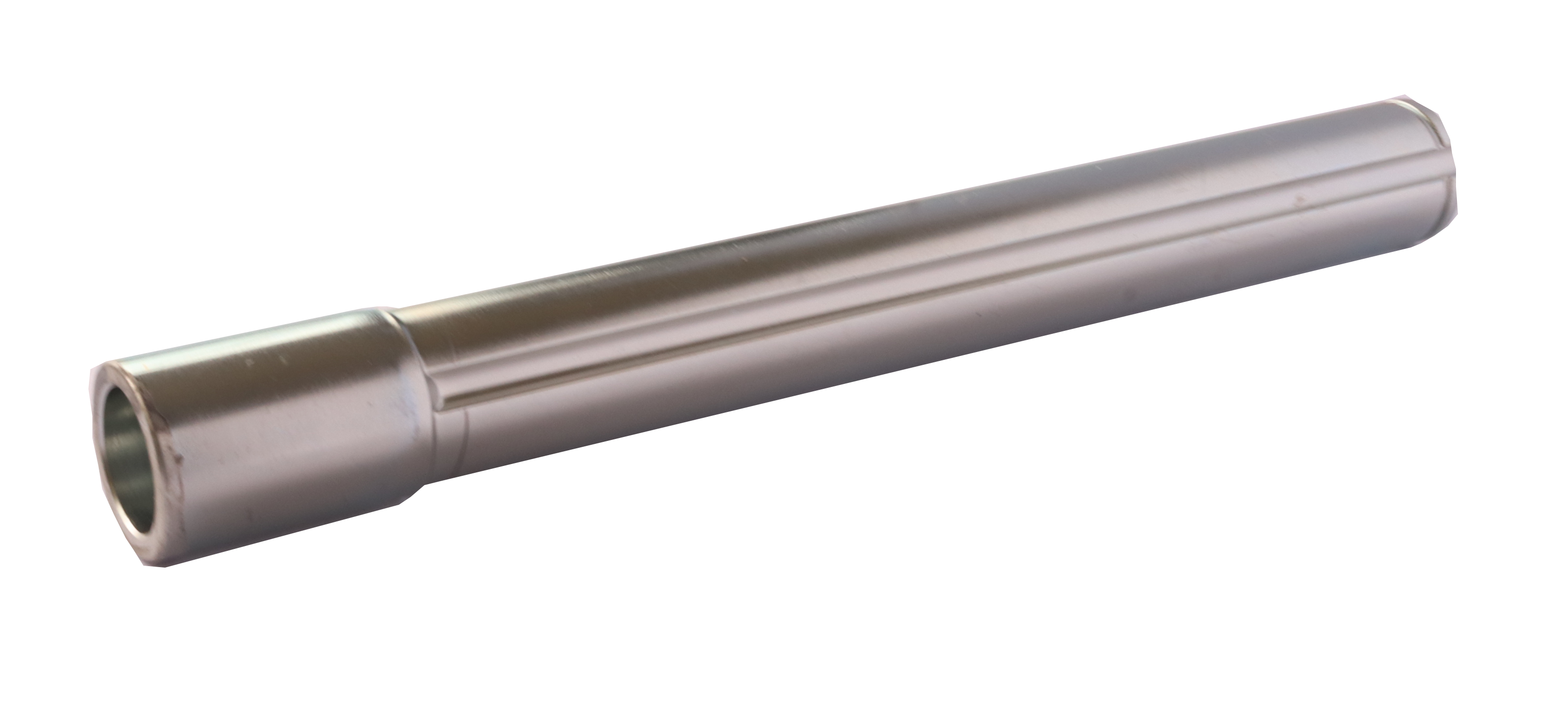
Custom Shaft Materials
Custom shafts are commonly made from several material families rather than one standard grade. General and medium-duty designs may use Chinese grades 20, 35, or 45 and SAE 1020, 1035, or 1045. Higher hardenability, fatigue strength, or impact resistance may lead to 40Cr, 42CrMo/SAE 4140, or SAE 4340. Case-hardened shafts may use 16MnCr5, 20MnCr5, 20CrMnTi, or SAE 8620 where the design needs a hard surface and tougher core.
Corrosion-sensitive shafts may specify 303, 304, or 316 stainless steel; 410 or 420 stainless where hardenability is important; or 17-4PH where higher strength and corrosion resistance are needed. Aluminum grades such as 6061 or 7075, copper alloys, titanium alloys, and engineering polymers can serve specialized lightweight, electrical, corrosion, or lower-load functions, but their stiffness, wear, temperature, joining, and surface requirements differ from steel.
The exact designation and governing standard must come from the drawing. State delivery condition, mechanical properties, hardenability, cleanliness, certification, traceability, and permitted substitutions. Material selection cannot be separated from diameter, wall thickness, keyways, spline roots, shoulders, fatigue transitions, welding, plating, or heat treatment. Jinhua Machinery reviews manufacturability but does not replace the customer’s design validation.
Custom Shaft Heat Treatment
Common shaft specifications may call for normalization, stress relief, quench and temper, carburizing, carbonitriding, induction hardening, or nitriding. Each changes hardness distribution, core properties, distortion risk, machining allowance, and finishing sequence. These are drawing-defined treatment options, not a claim that every special process is performed in-house. Surface treatments such as black oxide, phosphate, or plating address appearance or corrosion and should not be confused with heat treatment.
A complete specification states the process or required properties, hardness scale and range, measurement location, case depth where applicable, core requirements, areas to protect, permissible decarburization, straightness, and post-treatment finishing. Long slender shafts and parts with asymmetric features require particular attention to distortion. Provider responsibility, certificates, hardness maps, microstructure checks, or case-depth reports should be agreed before quotation.
Custom Shaft Tolerance
Shaft tolerance is built around function and datums. Diameter alone may be less important than the relationship between bearing seats, sealing surfaces, gears, splines, threads, shoulders, and bores. Typical drawing controls include size, roundness, cylindricity, straightness, concentricity, total indicated runout, perpendicularity, position, surface roughness, and axial spacing. The drawing should distinguish critical characteristics from general tolerances.
Inspection methods commonly include micrometers, air or bore gauges, height and contour instruments, roundness equipment, coordinate measurement, roughness measurement, thread or spline gauges, hardness testing, and dedicated checking fixtures. Method, sampling, datum setup, temperature, report format, and gauge responsibility should be agreed. A numerical tolerance copied from another component is not evidence that it suits a new design.
Buyers should specify material certificates, dimensional layouts, heat-treatment records, coating reports, marking, traceability, packaging checks, and retention requirements with the RFQ. Jinhua Machinery plans inspection against the approved drawing and agreed acceptance criteria; see the quality inspection and process-control approach.
Capability must be evaluated by feature and process, not by one universal number for an entire shaft. A ground bearing journal, a turned relief, a milled flat, and a deep bore have different controls and measurement uncertainty. When a tolerance is especially tight, state its functional reason and mating condition so the inspection plan can use the correct datum, gauge, and frequency.
Custom Shaft Applications
Custom shafts appear in automotive steering, transmissions, pumps, electric motors, reducers, construction machinery, motorcycles, e-bikes, bicycles, home appliances, automation, and industrial equipment. A steering shaft may emphasize spline fit, backlash, corrosion resistance, marking, and traceability. A motor shaft may emphasize bearing journals, rotor interfaces, runout, balance, and noise. A pump shaft may emphasize sealing surfaces, corrosion, straightness, and wear.
Gearbox and reducer shafts can combine gear teeth, splines, bearing seats, threads, and oil features, making datum control and heat-treatment planning central. Machinery shafts may face shock load, reversing torque, abrasive contamination, or low-volume replacement needs. The application background helps the manufacturing team understand why selected dimensions matter, but final load calculation and safety approval remain with the design owner.
Provide torque, speed, duty cycle, environment, assembly method, service life and regulatory requirements when they affect the drawing. Supply mating-component drawings or approved interface data, and identify who provides parts or gauges for fit checks. This context supports manufacturing review without replacing the released specification.
Custom Shaft FAQ
How should a custom shaft quotation define delivery scope?
Use the controlled 2D drawing and available 3D model to confirm the supplied condition, included operations and records, and any unfinished operations after delivery. Agree acceptance criteria, packaging, destination and delivery timing for that scope.
Can a shaft be made from a forging instead of bar stock?
Possibly. Geometry, strength, material flow, machining allowance, tooling cost, and volume determine whether a forged blank is appropriate. Any change must be approved against the customer design.
Which shaft features usually require grinding?
Bearing journals, sealing surfaces, precision diameters, and datum-related locations commonly use grinding when size, form, roughness, or post-heat-treatment control requires it. The drawing defines the actual need.
What precision can Jinhua Machinery achieve on custom shaft diameters and bores?
For reviewed parts, precision ground outside diameters up to 50 mm and 300 mm effective length can achieve a 0.005 mm total diameter tolerance, 0.003 mm roundness, 0.005 mm cylindricity, 0.005 mm straightness per 300 mm, and Ra 0.2 μm. Bores up to 30 mm and L/D 3 can achieve a 0.009 mm total tolerance and Ra 1.0 μm. Other customer-specified standards can also be evaluated.
Can Jinhua Machinery review prototypes and production volumes?
Yes. Prototype, pilot and repeat-production routes can be reviewed separately. Agree the drawing revision, sample acceptance criteria and tooling or inspection differences before comparing costs; prototype acceptance alone does not validate the production route or customer assembly.
Related Manufacturing Cases
These are specific made-to-drawing examples. Their materials, processes and tolerances are component-specific and do not define a universal catalogue specification.


Request a quote
Request a Quote
Send drawings. Get a custom shaft manufacturing review.
Send the drawing and revision, material, critical dimensions and tolerances, surface and heat-treatment requirements, annual usage, batch volume, inspection or PPAP documents, packaging and delivery target.